
So You Want To Fight
Written by Atlas Team
February 19th, 2024

As a certified Muay Thai nerd (and, less importantly, coach and fighter…), I often find myself watching the beginner classes, wondering if any newer students will compete someday. If that’s you – new to Muay Thai and wanting to compete – you’ve come to the right place.
Here is a simplified timeline of fight prep, from now until the moment you step into the ring for an amateur fight.
Step 1: Think it through
Stepping into the ring to fight is a big commitment. Once you let your coach know you’re interested, there’s no backing out! It will take a lot of your time, energy, and money, so before you go all in, it’s important to make sure that path is right for you. Some things you might want to do before moving forward:
- Do your research. Maybe there’s a fighter or coach at your gym who you feel comfortable talking to – ask them how they got into it, what they wish they knew before fighting, etc. A conversation like that can open your eyes to the behind-the-scenes stuff a fighter goes through. In the same sense, taking to Google can also help (that’s why I’m here and happy to help!). Try to understand what stepping into the ring entails and what will be asked of you while you get ready.
- Spar more. Fighting is literally sparring, just faster and harder. As a beginner, you might not have a ton of chances to spar, so when you do, make sure you are present. What do you like about it? What do you dislike? If you’re going to fight, you will be sparring a lot (plus the fight itself!), so let’s make sure you enjoy it before you commit.
Step 2: Talk to your coach
Okay, you’ve thought it through, and you want to fight! I recommend expressing your interest to your coach as soon as you can. Communication is key – while it does sometimes happen this way, your coach is probably too busy to notice your interest on their own. Kick start the process with a simple question: “Hey coach, do you think I could compete eventually?”
Now that your coach knows you’re interested, they will help you make adjustments to get to where you want to be: competing.
Step 3: Adjust your training

So, what are those adjustments? While it is case to case based on your schedule, fitness level, weight, and other things, there are some general changes you should expect to see across the board.
- Training days. For a busy schedule, I recommend allotting at least three Muay Thai sessions per week. If you have more time, feel free to train every day (make sure to rest and recover, though)! The more training, the better. Getting those repetitions in is important as you build muscle memory that will help you when you get tired during a fight.
- Running. Muay Thai fights require a generous amount of cardio. While the fight itself is only six minutes long, you will be surprised by how exhausted you will feel regardless of your endurance level. One way to alleviate that gassed feeling is by adding some running to your schedule. You are a fighter, not a runner, though, so don’t go and run sixty-plus miles per week. Three thirty-minute runs every week is a good starting place, but if you’re unsure, ask your coach!
- Strength training. If you don’t already, lifting some weights is so important to develop strength to punch and kick hard in the fight. Some fighters say they throw up to three hundred kicks in a fight (that’s almost a kick every second!). Muscular endurance helps you build the strength to be able to do that. I recommend supplementing your Muay Thai training with two to three strength sessions every week, focusing on muscular endurance and targeting your whole body. Again, if you’re struggling to find a good routine or good exercises, ask your coach!
- Eating right. Not only will your eventual weight class benefit from eating clean but so will your training itself. Eating a ton of junk before practice will inhibit your performance in the moment and your improvement over time. I’m not saying you have to go crazy and eat nothing but a salad with chicken for every meal, but try to avoid fried foods and super sugary stuff, instead focusing on your protein intake and fueling your body for hard training sessions. Sometimes, coaches will require you to be at a certain weight before entering the ring for an exhibition bout. If keeping your weight under control is a struggle, I’m sure your coach will have some advice. You can even reach out to a nutritionist if you think it would be helpful.
At the end of the day, what your coach says goes. They will give you details on specific things you need to do in preparation for your fight. If you’re confused, ask! My best advice is to treat it like a challenge: try to prove to your coach and training partners that you’re the hardest worker in the gym.
Step 4: Smoker(s)
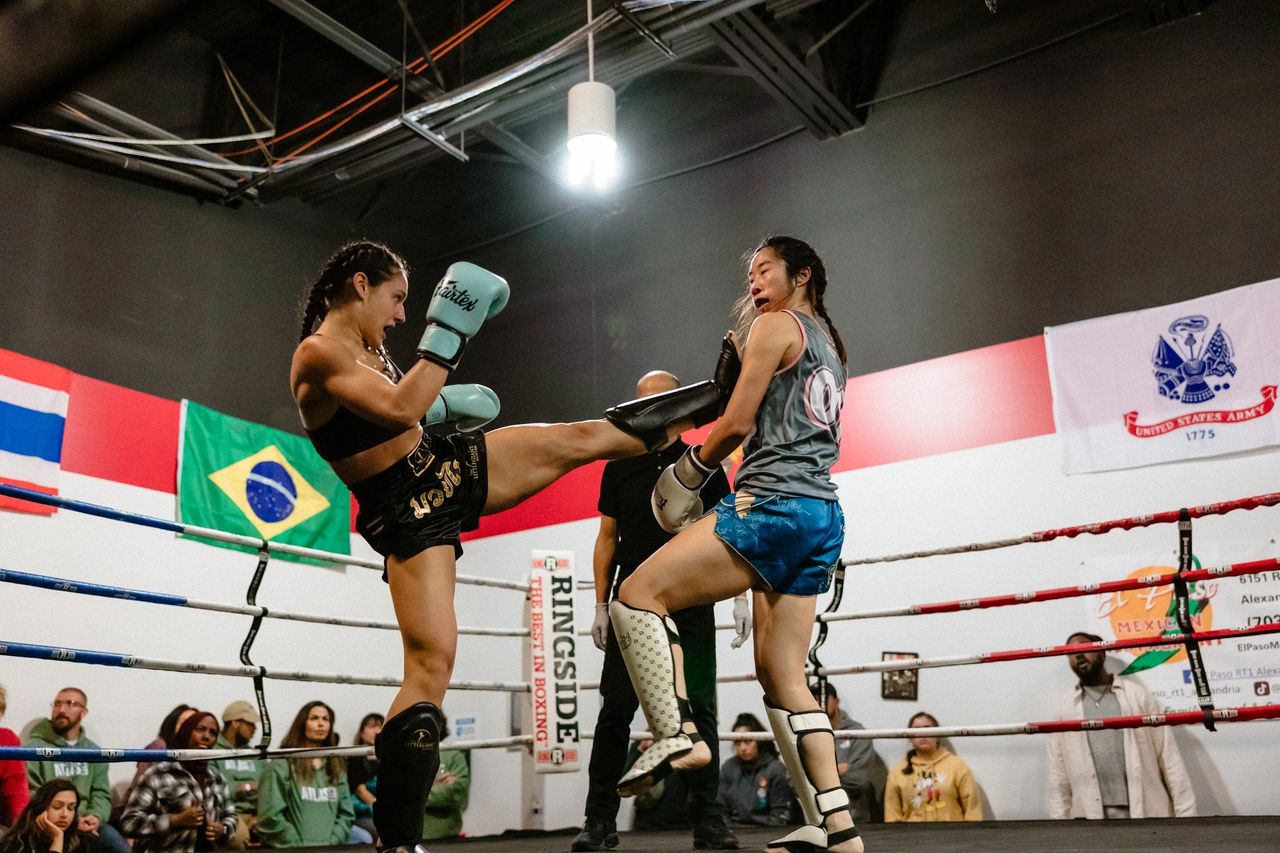
A smoker or exhibition match is (usually) the first level of competition in Muay Thai. It’s essentially hard sparring against an opponent at your skill level and weight class. The rounds mimic that of actual Muay Thai fights (length, intensity, etc.), the only catch is there is no winner and you don’t cut weight. Doing exhibition bouts will get you acclimated with ring anxiety, fighting in front of a crowd, and the pace of a fight. It also helps you pick the weight class you’ll fight at eventually.
When you eventually get to fight day, you will be nervous (unless you’re crazy!). It’s easier said than done, but in my experience, finding a way to let go of those nerves is the best course of action. I use a handful of strategies that, in some combination, solve my ring anxiety. I like to put myself in my opponent’s shoes (they are definitely feeling the exact same way that you are!) and trust in my preparation and my coach (in a way, I let them “borrow” my nervousness so that I can be relieved of it on fight day). There are a ton of other strategies for dealing with pre-fight nerves out there – Google is your friend.
Once the bout itself starts, you will forget everything you were stressed about as adrenaline takes over. I mentioned this earlier, but it’s only six minutes! Try to be present and enjoy it before it’s over – you’ve trained hard for this, and it’s time to show everyone what you’ve learned.
Step 5: Keep it up
After your first smoker, your coach will analyze your performance to plan the next steps. Even though there was no winner, they probably scored your fight. Was it close? How was your ability to keep score? What did you do well? What can you work on? How was the weight class? Those are the kinds of questions your coach is thinking about post-smoker. If your coach doesn’t explicitly tell you the things you need to fix after your fight, I 100% recommend asking. When your coach tells you to work on something, don’t take it personally. Adopt a learning mindset and lose the ego. A very wise teammate once told me “You win or you learn”; there’s no such thing as losing in this sport, so don’t beat yourself up. Leave that to your opponents and sparring partners!
Most likely, you will do another smoker before moving on to amateur so you can fully learn from the mistakes you made the first time. For now, keep up the hard work – keep sparring with people better than you, keep eating right, keep lifting, keep running, keep asking questions, and keep learning. Over time, the little mistakes you made in your smoker will disappear, either with more training or more ring experience.
Step 6: Amateur fight

As you keep fighting, your coach will eventually bring up the possibility of an amateur fight. It’s so important that you stay ready for this moment – you don’t want your coach to tell you they have a fight for you only to hear, “Sorry, coach, I can’t” in response. They’re less likely to look for a fight for you if you aren’t ready when they call you. This means staying close to your fight weight and putting in the work in and out of the gym. It’s so close now, don’t ease up!
Let’s say your amateur fight is scheduled – it’s go time, get excited! If you were giving 100% in the gym before, now give 120%. The amateur level comes with new challenges you didn’t face in your smoker, so push in training to make sure you can bring your A-game come fight day.
You will have to make a specific weight class for an amateur fight. Based on your performance in smokers, your coach will help you pick a weight division that is realistic where you will be competitive. You might work with your coach or a nutritionist to make weight-cut plans as you approach the fight.
When you get to fight day, you will be ready – you will have built up your knowledge, training, mindset, and all the things you need to get in the ring and kill it! All that’s left is to show up and show out.
Conclusion
Do you still want to fight? I hope so. If you do, now you have a general game plan to base your training on!
Like I said, all of this is case by case – sometimes you go straight to an amateur fight and skip any smokers or find that you just like smokers and want to do those only. Everyone is different!
You can reach out to me via email with more questions. I’d love to elaborate on these steps to help you get where you want to be!
If you’d like to start the process of fight prep, and you live in the Washington, DC area, come check out Atlas Muay Thai Gym in Old Town, Alexandria! Not only is our fight team super active, but we host smoker events every other month that aid a steady flow of beginners to fighters.
Share this post: